
Investors > Investing in Hexicon
HEXICON AS AN INVESTMENT
Investing in Hexicon means investing in a sustainable future
Forecasts indicate that floating offshore wind power will be a key component in transforming the global energy system. We are dedicated to playing our part in accelerating this energy transition to help decarbonise society. That is why our mission is to demonstrate and prove the potential of floating offshore wind as an early-stage project developer and technology provider. As a result, Hexicon provides an attractive growth opportunity in a fast-evolving and maturing market.
-
Hexicon is at the forefront of the floating offshore wind revolution, strategically investing in projects and technology assets that significantly increase in value during the development phase. Operating within a rapidly evolving market, Hexicon is well-positioned to capitalise on the immense global opportunity for floating offshore wind.
Our expertise lies in pioneering technology and early-stage development, including site selection, permitting, and commercialisation in the world’s leading offshore wind markets. Hexicon’s innovative spirit and deep knowledge of project development enable us to identify and unlock new deep-water areas for development. We achieve this by forging strong partnerships and closely collaborating with local governments, grid operators, suppliers, and other critical stakeholders.
Hexicon offers a compelling growth opportunity through a diversified project portfolio combined with our patented technology, TwinWind, within a market that is both fast-evolving and maturing.
UNIQUE VALUE PROPOSITION:
Global Market Potential: The floating offshore wind market is projected to reach 264 GW of installed capacity by 2050, representing a significant growth opportunity (DNV Report, 2022).
Industry Leadership: Hexicon is an early mover and market leader with a strategic presence in several key OECD markets, positioning us at the heart of global energy transformation.
Dual Revenue Streamed Business Model: Our business model uniquely combines project development with technology licensing, creating independent revenue streams but also important synergies that maximise value.
Attractive Project Portfolio: With a growing global active project portfolio, Hexicon is actively contributing to the expansion of floating offshore wind projects worldwide.
Innovative Technology: Hexicon’s patented TwinWind platform is a cutting-edge technology ready for testing, offering a unique solution to the challenges of deep-water wind energy.
OUR BUSINESS MODEL
REVENUES THROUGH DIVESTMENTS AND LICENCE FEES
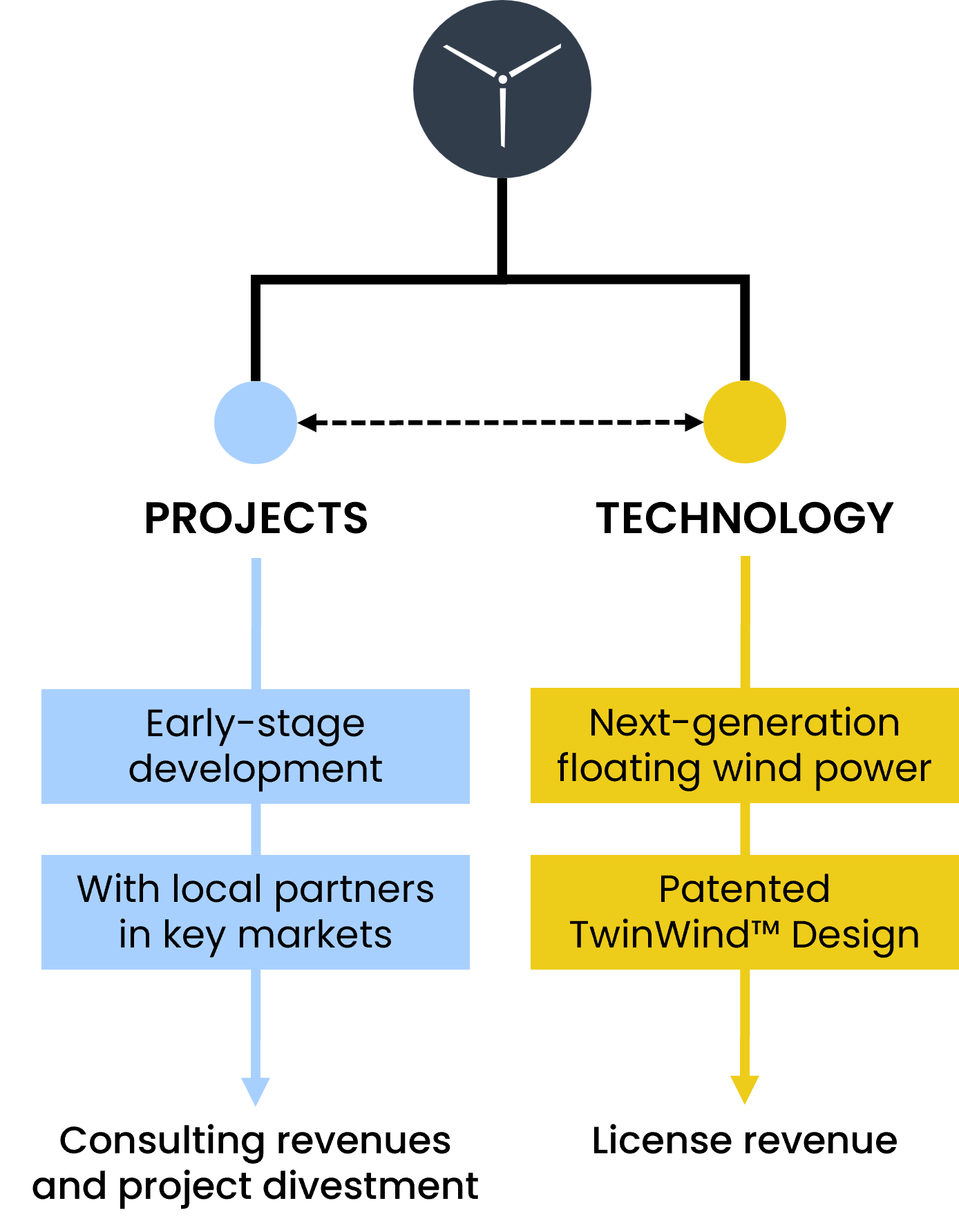
Hexicon has two distinct areas of business - as a Project developer and Technology provider.
The two business areas are independent of each other, diversifying the business and generating independent revenue streams. At the same time, synergies are created through Hexicon’s experience, expertise, and partnerships. Revenue is achieved through project ownership and divestments, as well as through license fees for the construction and operation of Hexicon’s patented technology.
-
Our vast experience and know-how of identifying suitable areas for floating offshore wind and opening these new markets for future investments – have proven to be a success factor.
As we unlock these new markets, the early-stage development allows for high ROI (return of investment). This becomes a reality due to a large developer-premium reached by utilising our longstanding technical and project development experience combined with our network of local partners who are experts in the domestic market environment.
As development cycles span over long periods, depending on market maturity and permitting processes, Hexicon seeks to divest before FID (Final Investment Decision) and partially or fully divest before the late-stage development when the capital requirement accelerates. Divesting ownership when moving into the late-stage development Hexicon ensures sustainable capital allocation and can push up the return on capital employed due to high-developer premiums.
-
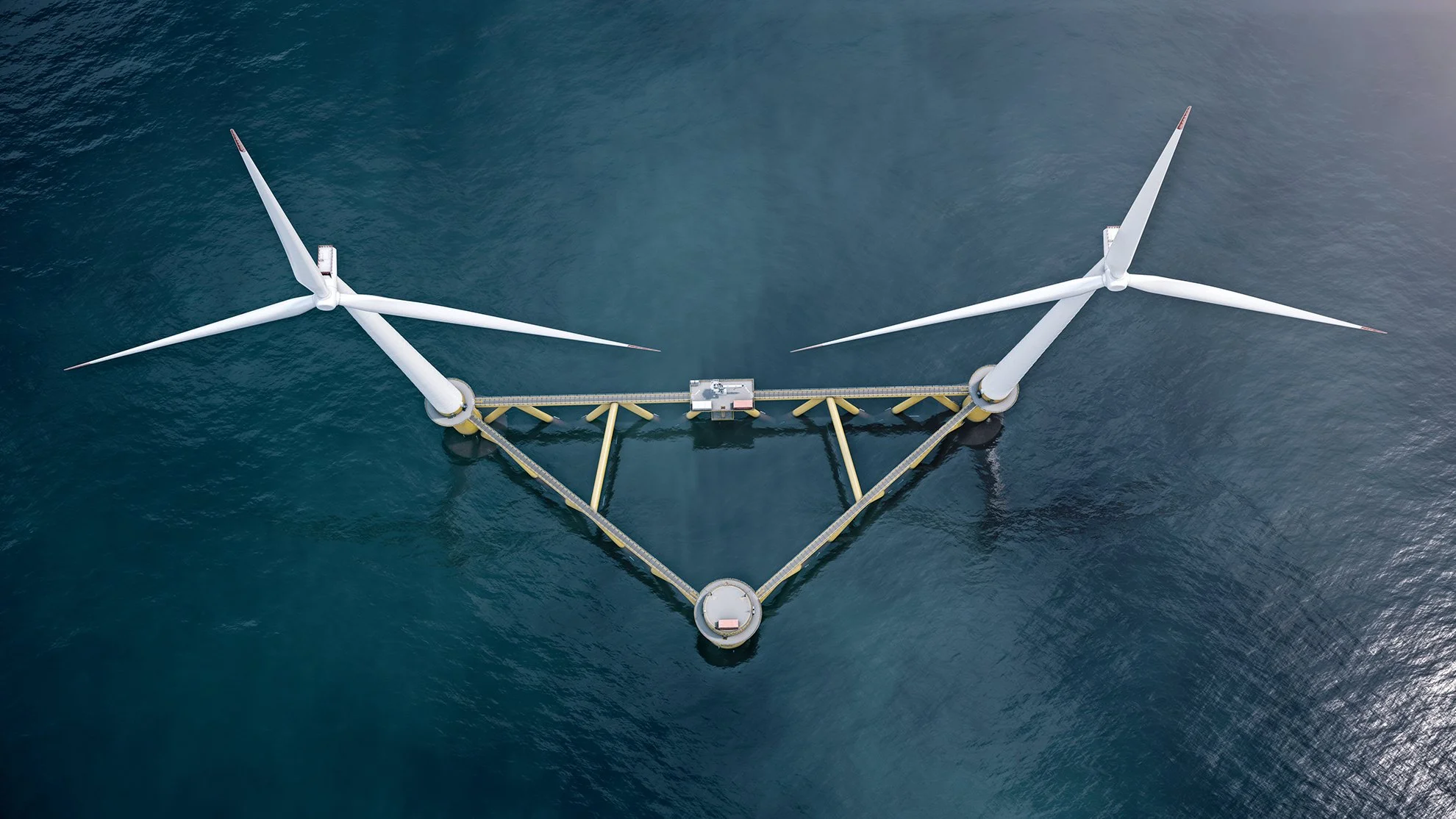
Hexicon's patented technology, which combines a dual-turbine design with a floating platform, allows for the installation of two turbines on a single foundation. This innovative approach results in more energy production per water area. The platform's automatic weathervane capability ensures optimal alignment with the wind, maximising energy generation. Additionally, Hexicon utilises commercially available turbines, eliminating the need for customisation and reducing costs.
Hexicon is a front-runner in the dual-turbine segment through its patented TwinWind™ technology which is ready for procurement. The design has been refined over the last years and has gone through basin tests with successful results.
INVESTMENT HIGHLIGHTS
1. Market pioneer
Positioned as a pioneer in the floating wind power industry, with early market entry and advanced technology.
2. Patented technology
Hexicon’s patented TwinWind™ platform is designed to maximise efficiency in deep-water wind resource areas.
3. Strategic market presence
Active in strategic key markets, including Europe, Asia, and Africa, with local partnerships and a maturing project portfolio.
4. High growth potential
Capitalising on the projected exponential growth of the floating wind sector, expected to reach 264 GW by 2050.
5. Sustainable investment
Aligns with global energy trends and the transition to renewable energy, offering long-term returns in an expanding market.

MARKET OPPORTUNITY
market outlook for floating offshore wind
As the global push for cleaner energy accelerates, floating offshore wind power is emerging as a key market opportunity. With the potential to unlock deep-water wind resources and meet growing energy demands, this technology is positioned to play a crucial role in the future energy mix.
Global energy demands continue to rise, driven by population growth and the electrification of various sectors, and the need for sustainable and scalable energy solutions has never been more critical. Renewable energy sources, particularly solar and wind power, are at the forefront of meeting this growing demand. Among these, floating wind power is emerging as a vital technology, capable of harnessing vast offshore wind resources in deep-water areas where traditional fixed-bottom wind turbines are not feasible. With projections indicating that floating wind could produce nearly 900 TWh annually by 2050 —equivalent to the combined electricity consumption of Germany and the UK, or enough to power over 200 million European homes each year, this technology is set to play a crucial role in the transition to a cleaner, more resilient global energy system.
-
The energy landscape is undergoing a profound transformation due to the raising global electricity demand. According to the International Energy Agency (IEA), global electricity demand is expected to increase by 50% by 2040. This surge in demand is matched by an urgent need to transition to cleaner energy sources to combat climate change.
Renewable energy, particularly solar and wind, is set to dominate the future energy mix. The IEA predicts that solar energy will become the leading source of electricity generation globally by the 2030s. However, the potential of wind energy, especially floating offshore wind, is increasingly recognised as a critical component of this transition.
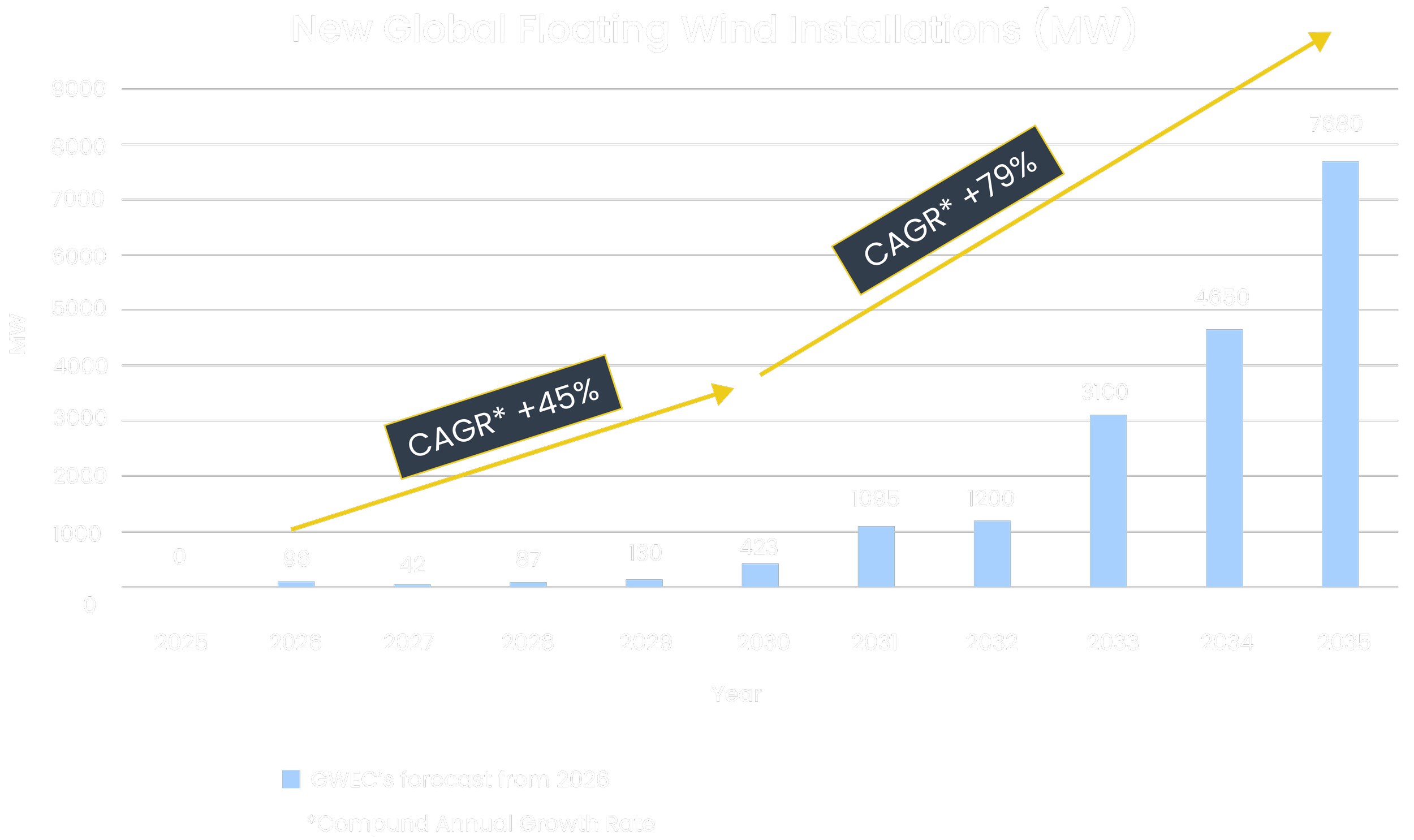
Floating wind technology, which allows wind turbines to be deployed in deeper waters where traditional fixed-bottom structures are not feasible, offers access to vast untapped wind resources. DNV's Energy Transition Outlook projects that the installed capacity of floating wind power could reach over 260 GW by 2050 (15% of all offshore wind energy) making it a key player in the global energy market. This growth is not only driven by the technology's ability to harness strong and consistent winds but also by the increasing political support for renewable energy.
Based on the GWEC's Global Offshore Wind Report (2024) predictions, the share of new floating wind installations by region can be broken down as follows:
Europe: Expected to dominate with approximately 60% of all new floating wind installations by 2050. This is driven by significant policy support and investment, particularly in countries like the UK, France, and Italy.
Asia: Set to capture around 33% of the global market, with major contributions from South Korea, Japan, and emerging markets like Taiwan.
North America: Projected to account for roughly 7% of new floating wind installations, as the U.S. ramps up its offshore wind capacity following recent lease auctions and new targets.
For Hexicon, a leader in floating wind technology, these projections highlight a significant market opportunity. As the world shifts towards a sustainable energy future, Hexicon's innovative solutions are poised to play a vital role in meeting the rising demand for clean, reliable, and scalable energy.
KEY MARKET DEVELOPMENTS
In addition to the global projections, specific market events underscore the rapid evolution and growing importance of floating offshore wind power:
EUROPE
The UK held its first floating Contracts for Difference (CfD) auction in 2022, with Hexicon emerging as the winner. Two years later, in July 2024, the British government budgeted for £1.1 billion for offshore wind auctions, sending a strong signal to the industry to invest in UK waters. Recent legislation approvals in Italy and France, and upcoming auctions in countries like Ireland, Portugal, and Norway, further highlight Europe's leadership in floating wind.
ASIA-PACIFIC
The Asia-Pacific region shows strong growth potential for floating offshore wind, driven by high renewable ambitions combined with deep-water coastlines suitable for floating wind technology in countries like South Korea, Taiwan, and Japan. In 2024, South Korea held its first floating offshore wind auction which Equinor won with its Bandibuli project. Japan and Taiwan are also preparing for auctions, signalling significant opportunities for expansion in this sector.
AFRICA
In 2024, Morocco announced its plans to develop Africa's first offshore wind power project, while other countries like South Africa, ideal for floating wind technology, are exploring more clean energy projects as Africa's energy demand is set to quadruple by 2040. A combination of abundant offshore resources around coastal countries, decreasing costs for offshore wind developments, some of the fastest-growing economies in the world, and the need to diversify energy supply, make Africa a promising future market for floating offshore wind.